Menopause and life changes with Jeanne Andrus
Jeanne Andrus joins Kandiee Campbell for a conversation about menopause. Jeanne discusses her perspective as a menopause coach and the changes women may want to talk about during this stage of life.
Listen
Awaken Hope with Jeanne Andrus
May 23, 2024 · 60:01
Read draft transcript
Automatic transcript with light edits to names and spacing. Some words may be wrong, and speakers are not labeled. Breaks and sponsor messages are included. Check the recording before quoting a passage.
0:00 Are you tired of feeling hopeless, or do you feel as though you carry around an invisible ball and chain? If so, you are in the right place. It's time now for Awaken Hope with Kandiee Campbell. Kandiee is a therapist and grief counselor that works with women to help them process and heal from emotional events that can keep them feeling stuck. Let's take this journey together. And now, here's your host, Kandiee Campbell. Hello, hello, hello! Welcome back to Awaken Hope with Kandiee Campbell. I am so super grateful that you were choosing to tune in and listen. I have a wonderful guest I'm going to introduce you to.
0:43 So, many of you know, I'm coming from Hawaii. You may or may not hear a plane or a jet flyover. If you do, momentary pause. So but let me get into the introduction of our wonderful guest. Today, I would like to introduce Jeanne Andrus. She is the menopause guru and Jean's been coaching, writing, and speaking about menopause for over a decade. She's the author of the intentionally best-selling, I Just Want to Be Me Again. And she also helps people resolve menopause symptoms. She's coaching. Her coaching is bolstered by hypnotherapy, Reiki, yoga, breath work, and the love for science and anthropology. Buckle up, listen in, as Jean shares with us the secrets of a good night's sleep.
1:52 And who couldn't use that, who's having menopause symptoms? Welcome, you know? Thank you so much for having me, Kandiee. I'm really looking forward to our conversation today. So yes, definitely a topic that many of us, especially us older women, are going through. And it's not, I don't know, I mean, I know you know, but it's not one of those things once you enter menopause that it just kind of happens for a week and then disappears. No, so I like to warn people, maybe, is the way to say it. For most women, the initial phases of menopause, which you may not even notice, but your body is aware of the change.
2:49 As early as somewhere between '38 and '43, wait a minute, that's not all, that post happens to all people, no. Menopause happens to us fairly early on. A perimenopause, when we start losing our cycle, our ovulation, actually happens usually in our late 30s to early 40s. And then it goes on for a really long time. Oh, yes, I understand that. So perimenopause, perimenopause, meaning near menopause, is a process by which we slowly lose our ovulation, month over month, some quick, sometimes it just feels like it happens overnight and it's over. But for most of us, it goes on for 10 to 15 years. And then you don't have a period for a year, and you hit what is officially your menopause.
3:59 And after that, oh, everything's beautiful, right? Nope, sorry. After that, after you hit that one-year mark, you're officially post-menopausal, and that lasts for the rest of your life. Fortunately, fortunately for most of us, we kind of get used to our new hormonal balance somewhere between one to five years after that one-year mark. So it sort of settles down and you sort of get to the point where your body is used to it. But because the production of your hormones is different after menopause than before menopause, you can stress yourself out and unbalance your hormones all over again, which usually is a result of stress. And you can get back to, "Oh, wait a minute, I just had a hot flash again."
5:11 And that was 10 or 12 years ago. So it can last a long time. So we need to know what's happening to us so that we can protect our bodies as best we can and be in the best possible health. And I know you know a lot about taking care of yourself to get to the best possible health and stay there and that it doesn't just magically stop going out of whack because you think you got it and then, so it happens. Well, I definitely understand the effects of stress. I mean, who knew? I mean, I'm learning something new because yes, stress can affect your body, but I didn't even know that it was impacting menopause.
6:11 Okay. So let's get a look. This is where I get into the science. So tell me when your eyes glaze over, just say, "Stop," because I'll take a step back. But after the primary hormones involved in our reproductive cycle are estrogen and progesterone. And though they have a lot of different functions in our bodies and interact with a lot of our other major hormones, they're made in our ovaries while our reproductive cycle is going on. But once we stop ovulation, our ovaries make about 2% of the estrogen and progesterone that we used to have, which really isn't enough to make our bodies happy because we need them for a lot of different functions.
7:13 So there's residual hormones being made in our adrenal glands. And our adrenal glands, those two little walnut sized glands that sit on top of our kidneys have a lot of function, make a lot of hormones. They make cortisol, adrenaline, and noradrenaline, which are stress hormones, noradrenaline being our excitement hormone, the one that if you can stand riding a roller coaster, it shows up when you're riding a roller coaster. It's the fun excitement one, it has a lot of, it does create stress in the body, but it doesn't create quite the same stress. Adrenaline or ebonephrine, same name for the same thing, is your fight or flight.
8:18 There's a snake in the path. There's a lion jumping on me. Reaction, quick reaction hormone. That's the one that tells you you are in massive danger and you got to do something. Today's environment, we mostly see that one on the highways. When something comes out of it, happened to me last night, something came alongside me that I wasn't expecting. And I went, and it shocked me and I could just feel the little jolt of adrenaline that was saying, react to that. And cortisol, which is your medium to long term stress hormone, which when it developed in the evolutionary world, the main thing that cortisol was dealing with was famine.
9:14 So famine is a stressor on your body. And what cortisol does is say, we need to conserve every piece of you that we possibly can because we don't know when the Nile is going to flood again and we're going to get food. So cortisol, ebonephrine or adrenaline, norepinephrine or noradrenaline, those are the stress hormones. It also produces all of the male hormones that we get, which we do have about 10% of what men have. And they're pretty much steady, but going down as we get older. And it's testosterone and all the testosterone precursors. And then it produces all our residual estrogen and progesterone. And if you think of the hierarchy, it produces first cortisol because cortisol has some functions in our body that we must have.
10:29 The biggest one of which is waking us up in the morning or in the middle of the night or keeping us from going to sleep at night if things get screwed up. The next are the noradrenaline pair, then estrogen and testosterone. And the last is progesterone. And that's because progesterone's primary responsibility in the body is maintaining a pregnancy. And so when things aren't going well, we don't get pregnant and stay pregnant, which is what progesterone's primary responsibility is. So after menopause, when we get stressed, our adrenal glands stop producing estrogen, testosterone, and progesterone. The cocktail of hormones that we need makes us feel reasonably good, is foregone in place of these high stress hormones.
11:48 So this is why stress and menopause are so problematic when you get stressed during menopause. What it's doing is taking the hormones you want to keep and replacing that with these high stress hormones. Now, I'm a little bit of an adrenaline junkie, not as much as a lot of people. So there's not a little bit of noradrenaline, yeah, that's a good thing, but this high stress that we get from day-to-day living, from going to work in a stressful environment, from working for a boss who doesn't get us, and they really don't get us when we're menopausal, becomes really problematic because it's taking away from our ability to function normally.
12:54 There's another piece of this. This is more bad news. Sorry. Well, this gives us a good breaking point because we're going to take a short break. And then we're going to come back and we're going to learn more because I'm learning more because I definitely understand the effects of stress, but I really hadn't thought about how stress was affecting my hot flashes. Who knew? Who knew? 18, ladies and gentlemen, we'll be right back. Hey. One hour pickup order. Got it. We're out of ink and I have a big meeting today. And two boxes of Twizzlers. Yeah, for the team. The team. Team. Go team. Go team.
13:45 Go team. Go team. Go team. Go team. Go team. Go team. Go team. Go team. Go team. Go team. Welcome back to Awaken Hope. And I have a true privilege of having that menopause guru, Jeanne Andrus with me today. And we've been talking about menopause. And yes, okay, for those men that are listening, understand it's, I know menopause is not necessarily something that you're, you may go through, you have your own version of it, you know, when your hormones change, but if you're around any female, a spouse, a partner and that stage, at least you tune, if you tune in, you can learn how best to support them and understand what our bodies are going through.
14:41 So Jean, before we get into the continuation of all the science and everything about how stress impacts us, can you share with us, if someone's wanting to work with you, how can they get in touch with you? So I have a website called menopause.guru. And if you happen to, you know, think you need to put the comm on there, menopauseguru.com will just redirect you. And you can find out what's going on, what free workshops I have, and reach out to me through that website. I am also menopause guru on Facebook. So that page is mine as well. So, and you can find my podcasts wherever podcasts are downloadable at menopause matters.
15:36 And I am the one with the blue hair. Yes, I have seen her with blue hair. And it's not the blue, not your regular blue hair, blue hair grandma. We're gonna, well, we will make sure that all that information is put in the show notes so you can reach out to her. And I really highly recommend and encourage anybody that's experiencing this or starting this process, it truly is a process. I mean, it is a process. And it's not something, you know, it's one of those days you wake up and you kind of go, Oh, you know, especially when you're starting the hot flashes, until you learn to get something that kind of mitigates that or lessens those hot flashes can come.
16:25 It's kind of, it reminds me almost like labor, you know, you get a contraction and you get one and it goes away and then it comes back and you get another one that lasts a little longer. And it's like, wow, is this ever gonna stop? Well, so hot flashes are a really interesting, interesting phenomena because I think often that hot flashes that last more than, than a fairly brief time often haven't a referent in our emotional states, so often, often they can be signs of anger, embarrassment, anything that you can think of, you know, hot under the collar, red in the face. I had one woman, I worked with one woman, short briefly, and we could figure out kind of why she was continuing to get hot flashes so badly until she told me she was working on her own business.
17:40 And she told me, nobody, I don't like to sweat. No one likes to sweat. And then we started talking about her business and how it was, it was making her nervous and fearful and that she was sweating through her job. You know, she was in a sweat about her business and you know, it changed the way she thought about her hot flashes because they were literally making her sweat. And so was, so was this business she was trying to build. So if for some reason, you're not able to just kind of get to them, get through them with some checking for the, yeah, food triggers, you know, some people get them from Mexican or Sashuan food, where high pepper, furries, whatever, some people get them from alcohol.
18:45 Some people unfortunately get them from chocolate. I don't think this is fair at all. It's not, doesn't happen to me. So I'm not, but let me just give your listeners a quick tip for getting rid of a hot flash because this one is super easy. It's super cheap. You may have to order it from Amazon, but you can get the little gel packs, the little, like little tiny itty bitty freezer packs. They're two by three and they're designed to go on a, like a, a burn or, or a swollen place on your body. So you get, get them from the first aid section in Amazon or Walmart or whatever.
19:38 When you get your hot flash, if you've got one nearby that's cold, like sitting in a little freezer bag on your desk or next to your bed at night, you can grab one of those and you stick it on the inside of your wrist. And of course you can't see me cause this is radio, but you sit on the inside of your wrist where the skin is thin. The other places would be the back of your neck or the insides of your ankles. And that will very quickly cool down the blood that is starting to rush through your body because what's a hot flash is about your body has got your hypothalamus back to science, your hypothalamus, which regulates your body temperature thinks you're too warm.
20:32 So it rushes blood to the surface of your skin, making that warmer, which causes immediate sweating, which then gets cooled down by air, breeze, whatever, and cools you off. So bringing that cool to the inside of your wrist, you could also drink ice water. And if you're good at visualization, you can just, and you know what a snowstorm is, you know, I know you guys in Hawaii don't get that very often, but if you know what it feels like to be outside in the winter, you can just imagine that. And it will start to take that off. If you've got no other place to go, just imagine yourself outside in the snow, bring yourself into that scene as much as you can.
21:28 And it will calm down that hot flash. I do situations like that. I mean, I don't have snow out here, but I have been in snow, but I'll be like, when I wake up and maybe I don't have a, an ice pack near me, but I'm like, okay, we're going to visualize being in cold weather, your body's cool, it's relaxed. Just get one of those lunch, insulated lunch bags, get them at the, at the grocery store for, well, they used to be five bucks. I don't know what they are now. And the kids should have them too and order, order, uh, half a dozen or a dozen of those little tiny gel packs, put them in the freezer, put two or three in the lunch bag next to your bed, hot flash.
22:20 That's not going away. Grab one and put it on your wrist. Take the covers off, try and get to it before you sweat up and destroy your, your bed bedding for the night. Um, but that is, that is my go-to way of getting rid of a hot flash. Oh, no. Very good tip. Ladies and gentlemen, use it. Okay. Gentlemen, you don't necessarily, but I know, you know, men have some guy it's, it, it comes with some very odd circumstances that other people not in menopause can get hot flashes. So it is a good tip for anyone. I mean, I know men have their, they have their own version of hot flashes.
23:10 Is that because of the change in the testosterone? Probably. Yeah. Yeah. And, but men's is men's, um, andropause is a little different than menopause in that for women, it cuts out completely and it cuts out in a relatively short time for men. It's a gradual decrease in testosterone of, of about 10% per decade, starting in the forties somewhere. So it's a, it's a much more gradual and a much less complete because five decades you can only get to, you know, by the time you're 95, you're 50%. Which is a lot more than the 10% residual estrogen that most women have. Yeah. Menopause is definitely one of those things that impacts us as we get older.
24:13 I mean, it's unfortunately kind of a fact of life that we have to navigate around. And I have learned for me, the more I resisted that, the fact that, you know, yes, I'm going into, I'm in menopause. I can't change that. The more I fought that the late, the stronger the hot flashes were, the stronger I felt. Is that a trigger? The more you resist, but I was like, okay, I, I'm, you know, after a while, I just started to realize it's like, okay, this is who I am. I'm not going to change that. I just have to make peace with the fact that I'm, I'm, I'm aging and it's okay.
25:01 So here's the thing that, that gets, that happened to me. I didn't know I was going into perimenopause and my gynecologist didn't tell me, thank you. She thought I knew. She thought I was smart enough and educated enough and well-read enough that I knew. Well, nobody ever said to me, and I'll say it right out here, 51 is the average age at which women are done their periods. 51 isn't old. And we have this, this belief or thought that menopause is something that happens to old women. Well, it isn't, it's women who are in the prime of who they are and what they can do.
25:59 So let me tell, get, can I tell a story? Of course. Okay. So this is, this is my favorite. How I figured out how, when I first learned about menopause, menopause first kind of came into my awareness. I was three and I was going to the movie theater. It was the first time I had ever gone to a movie and I am old now. So this was back when you, when movie theaters weren't multiplexes and you got dressed up to go to the movie theater. And so I was in my best pink dress and I was with my mother and my brother and we went to see the movie.
26:51 And this was the first time I had seen moving pictures in color. Wow. Okay. I'm 68 now. So we had a black and white TV. It was about 19 inches big. It was really small. They had to huddle around it, what a whole thing. So we went to the movie and I'm sitting in the, in the chair and my legs are straight out in front of me and it's scratching the back of my legs because it's that weird velvet velour thing that they used to have and the curtains open and onto the screen comes this magic princess dancing through the forest with the raccoons and the rabbits.
27:40 And she's so beautiful and she's singing. And then we moved to the next scene. And in the next scene, we see this beautiful regal queen and the queen turns to her wall and she says, magic mirror on the wall, who's the fairest of the us all? And the mirror replies and the mirror says, you, my queen, have a beauty quite rare. But little snow white is a thousand times more fair. The queen flies into a rage. She runs to her laboratory. She mixes up a potion of poison for the princess and she mixes up a second potion and drinks it down and turns instantly into a hag.
28:54 For most of us in America, in the last 70 years, our first intimation of what happens to a woman as she ages comes from Disney. Snow White, Cinderella, Sleeping Beauty, Little Mermaid, Brave, 101 Dalmatians. So many of Disney's villains are menopausal women. We don't think about it, but that is the perception we have in our culture is that women have lost their beauty, they turn into hags, they've lost their compassion, their niceness, they've lost their everything and we put them in a corner and we turn them into villains. That's not true. There's a little truth to it because one thing that we haven't talked about is what happens to our view of the world, shall I say.
30:36 And when we hit puberty as girls turning into women, all of a sudden we shift. So if you've ever been around like a junior Girl Scout troop, they're like really focused on careers and doing stuff in the world and out there. And somewhere around seventh or eighth grade, they shift and they focus on what I call the three B's, babies, boys, and biology. Yeah, because most of them go into beginning. They hit puberty and estrogen says you need a mate. Now this goes back, this is where anthropology comes in, this goes back to living in a tribal environment in a no tech society where we had to work together as tribe mates to survive.
31:44 So the women were often gravid. They were pregnant. They were nursing young ones. They had toddlers and some and as a group, the women were responsible for dealing with all of those little people who were becoming the tribe to come and the old people who may not be able to go to take care of themselves anymore. So the women worked as a group. So they would do the gathering part of the hunter gatherer. They would take care of the camp. They would cook the food. They would dress the skins. They worked all day long. But when a woman went into labor, she had her sisters to take her sister tribe mates to take care of her and to help her family get through that period of time when she was not capable of taking care of herself and just taking care of her baby.
32:53 So then we hit menopause. And what happens is estrogen has been used in our brains to create that people pleasing community person that we were while we were in our reproductive years. And this happens regularly somewhere around 43 to 45. A woman just looks up and says, "OMG, I have been a people pleaser for the last 20 or 30 years of my life and I am stopping it today." It's like a switch turns off in our brains. And what that is, is literally estrogen receding from our brains and saying, "It's your time now. You can take yourself from the outer edges of your life and put yourself into the middle of the circle."
34:01 Now when I say that, it doesn't mean she's going to throw out her husband and her children and her cat and her donkey, I don't know where that came from, but she's not going to throw out necessarily anything that's in there automatically. Although she may say, "I'm moving away from that stupid job I've been doing all these years and getting coffee for the guys. And I'm going to do XYZ because that's what I want to do. That's my passion. That's my purpose." And so we put ourselves into the middle of our own lives and that really is the gift of menopause. Of course, it comes sometimes with all these other weird symptoms, so you have to get the symptoms under control so you can take advantage of who you are now.
35:00 Does all that make sense? It does, actually it really does, which ironically, it's giving me some aha moments. I was like, "Okay," because I see that change within myself since I've gone into menopause. But we're going to take a short break, ladies and gentlemen. We will be back and we will continue because this truly I find so interesting. And so I'm learning a lot, not only about menopause, but just about myself, so stay tuned. Hello. Hello. Hello. It's Kandiee Campbell from the Awaken Hope Radio Show and I've got something special for you. As a licensed therapist who focuses on [therapy term unclear], I've teamed up with a writing coach to bring you a series of journals to help you process your feelings and emotions, hopefully gaining clarity and understanding along the way.
36:06 If you're ready to embark on a journey of healing, then I've got just the right thing for you, the Hope and Healing 90 Day Journal. Imagine, if you will, having your own compassionate companion guiding you through the ups and downs, twists and turns of life. That's what our journals are all about. Each page offers you prompts and nurturing guidance to help you reflect, explore, and grow. Whether you're facing grief, heartache, or just need a little extra support, the Hope and Healing 90 Day Journal is your safe space to let it all out and find your way back to hope. Thank you so much for tuning in and listening.
36:59 I am so grateful and I want to remind you that no matter how dark it may seem, there's always hope, so take the first step and let's link and hope together. Head over to the journalingcollective.com to get your journal now. This will change your life. Thank you. Hello, hello, hello, welcome back to Awaken Hope. Again, I have a menopause guru, Jean. She is here to share so much about menopause. We've been talking, and over the break, we were talking about various factors that could play into it, and there are any number of factors that can impact menopause and when one goes through it, you know.
37:50 But one thing that we were addressing, and I would love to have more of your insight on this, is we live in a highly stressful society these days. More stress than I think, I mean, any decade has been, and stress is always a factor. But if you stop and think about it, so many of us, we live in that perpetual sympathetic fight, flight, or freeze state, and we don't give our bodies time to come out of it. Or if it does, we transition right back into it, you know? I'm wondering, I mean, I was thinking just in my own life, knowing the levels of stress that I went through, if that didn't play a key or have an impact on the age that I went through menopause or perimenopause, started perimenopause, or I mean, we've talked about other factors.
38:58 What are your thoughts? So I think, so as we were saying on the break, menopause, perimenopause starts as you lose enough ovum that you're not bringing an ovum to maturity so that it releases or ovulates every month, and a woman is born with all the ovum eggs she's going to have, which is very different than a man who produces sperm on a regular basis. Women's ovum are finite in supply, and you start, I think the number is somewhere around a million, but by the time you are, even by the time you are born or one years old, you've lost about half of those. They're just not viable, they're not, they die off, things happen, nobody really knows exactly why.
40:08 But then, over your life, you lose a few of them every cycle, and even before you hit puberty, you're losing some, so that around puberty, it's somewhere around 100,000 that are left, and then every month, some of them begin to mature, and they mature inside what are known as follicles, and that has nothing to do with hair. It's just the same word as the roots of your hair, but each one of the ovum is surrounded by a follicle, and that follicle matures it in, it's sort of like the eggshell and white of a chicken egg is what the follicle is like, and inside of that, the egg is maturing.
41:05 When it releases, that's the follicle breaks, and progesterone and estrogen are released at that time. That's basically, it's your mid-cycle. Okay, so the ones that don't mature don't win the race to mature, just dissolve. Okay. So you lose some through that process every month, and you lose some through just sort of attrition, but then again, you can damage those ovarian eggs, as we were saying, things like, and I can't prove this, theories, but reasonable theories. What if you're in a car accident, and you have that seat belt on your lower abdomen, and you ram into it very hard, could cause eggs to be damaged that will then just disintegrate, never come to maturity.
42:16 If you are, say, in like, maybe your teeth are bad, and you're in the dentist all the time, and you're getting a lot of x-rays. So you're getting a lot of exposure that maybe no one thought was really bad 20 years ago. And so you have that exposure to x-rays could cause damage. Eating wrong could cause damage in there, just because your body doesn't have the nutrition. And as we may have said, the last thing your body will do is get pregnant and have another have a baby because that's highly costly in terms of number of calories you need and number amount of sleep and all of those things.
43:07 So we don't get pregnant, often in very high stress situations. So and even stress can create a problem with our follicles and our eggs maturing. Girls who are doing gymnastics, I think about the 13-year-olds who are in these elite gymnastics or skating programs where their calorie intake is very, very regimented are probably losing more ovum than most of us do on a regular basis. So when you run out of viable ovum, you start getting these anovulatory periods where you just don't ovulate because nothing comes to maturity. Now, just a political reminder here, not every ovum that comes to maturity is capable of producing a normal human being.
44:20 And when I say normal, I mean viable. Even a trisome is viable, but these babies where brains are developing outside of skulls and lungs are developing outside of the body and all of those things, they can come to maturity obviously because we have them, but generally the body sheds them. And if they don't, we need to take care of the problem. Just a little aside, just because of where we are politically right now, these things happen. So that's why, oh, and genetics, genetics is going to play a factor in how many eggs you have and how fast they dissolve or disappear. So it is not abnormal for a woman to be seeing that disappearing period at the age of 38.
45:24 It's also not abnormal for late fifties. So thirties to maybe 60, late thirties to maybe sixties is pretty much not abnormal for menopausal age. It's 51, but 38 to about 60 is not that unusual. Yeah, I can understand that. I mean, I went through it just in my late forties and it was like, and my doctor inside, usually it's later for women. Usually it's later, but I was 56 when I had my last period. But I also had a ton of health problems, I was under a lot of stuff and that probably did not help me. I didn't know I was having the issues I was having until they showed, but it makes sense.
46:25 Who knows? I mean, I am where I am and that's all I can do. I can't change what's done. All I can do is make peace with it. And I think the real thing about making peace with it, I do know a few women who have had a reasonably normal end to their periods and have not had the number of children that they wanted to, whether that was one or five. And that can be difficult to reconcile. But for most of us, if you're in your forties, late forties, and here's what I say, think about whether or not you really want to have a 16 year old when you're 64.
47:24 I get that. And I said, because I have grandkids coming and I'm like, okay, so that you can return them. Yeah, I can, you know, take care of them, love them, spoil them and send them back to mom and dad. They get to deal with all the all the growing up and all the angst and that comes with having children. I love my kids and I love my I love my son too. And I adore my grandkids. But boy, at the end of the day, if I've been the one taking care of them for the day, it's sort of like, Oh, gosh, I'm so glad you're home.
48:05 I get that. I mean, I was watching babysitting for a friend of mine who's kids and they were four and six, four and seven. And I was like, after a couple hours, I was exhausted. I'm like, Oh, my gosh, and I can see why there's a reason why I made a comment. I understand why people have children younger, because when I was in my 20s, and even in my 30s, I had a heck of a lot more energy than I do these days, like I'll go play Ultimate Frisbee. And then I come home and I'm like, I am so tired, you know, listen, they're thinking, do I want to eat dinner?
48:46 And I know I have to eat dinner, but I don't feel like cooking, you know, and I'll just lay there kind of like, like a couch potato, so to speak. And I'm just like, until I get the energy or the oomph to get up and figure out what I'm gonna do going forward. But I know when I, you know, when I look back in my life, and I'm like, having kids when I was younger was definitely a smarter thing, because I had a lot more energy, I could go a lot longer. I had, you know, to spare, whereas, you know, I don't think is, you know, there's all kinds of theories about why menopause evolutionarily happened to humans, because menopause for us, the female of the species, to stop having babies significantly before their death, happens only in approximately six species that they've recorded, humans, and five from one mammal family.
50:02 Want to guess what it is? Hmm, it's always fun to ask people to guess. Okay, let's say humans and canines. Nope. Nope, it's set of pods, whales, wow, whales that live in pods. Hmm, so apparently, in those species, they're heavily migratory. And it's the grandmother of the pod. And not every whale in these pods lives that long. But the grandmothers in the pod are the ones who have the knowledge of where the food is at what time of year. So they know where to go for the plankton that they need to feed on, or the fish they need to feed on. And it's not like gray whales, or blue whales, or humpies, which don't live in groups, but it's like orcas, and narwhals, and I always forget which ones they are.
51:22 But they're pod dwellers, and so it's these grandmothers that know how to navigate the oceans by the currents, and the water temperatures, and all. So that's really interesting. And so to me, that says, okay, why did humans develop it, develop menopause? Because it's a fairly early development in human history, and you know that, because all humans everywhere go through it. It's not limited to one continent, or only Europeans, which would mean that it developed long after humans left Africa, or whatever. But all humans go through it. So what is it that gave that, that was special? And there is the grandmother theory that says that the grandmothers were taking care of the orphaned children, and that there's some legitimacy to that.
52:35 But I think in a lot of ways, the grandmothers were the keepers of the wisdom, and the keepers and the healers. So it was the grandmothers who had the time and the space to learn what the herbs and plants in their environment could do and gather and dry and keep those available for healing. And I think that that may have been the role that these menopausal women played. And the older men likewise played a role in the tribe of being some of the keep, and both were probably the keepers of the history and the tales and the knowledge. So yeah, I do believe it's an incredibly interesting role and gift to women that we have the opportunities available to us to kind of develop something different than we were when we were having kids.
53:44 So you want to talk about sleep? Yeah, let's talk about sleep. Let's talk about sleep. Definitely something that gets impacted. So sleep, sleep is so the most, the most common symptom slash side effects slash effect of menopause is that we no longer have our periods. And in a pre-modern world that affected every woman who went into menopause. Now we have hysterectomies without rectomies. And you know, we have to have different ways of getting rid of our periods, but periods happened 100% of us. The next most common side effect is bad sleep, 90% of women go through one or more period of bad sleep lasting six or more weeks at a time where they just don't sleep.
54:51 Now sleep is also one of the most costly side effects that we can have because I call it the hormone sleep death spiral. Did you say hormone sleep death? Hormone sleep death spiral. I don't think you, you might not actually die. You just want to. Ah, I get that. So hormones, that hormones out of balance and not just estrogen and progesterone, but cortisol, insulin, thyroid, testosterone, and melatonin. And then we could throw in serotonin, dopamine, and oxytocin in there, but we won't. Those seven, if they, if any one of those is out of balance, it causes bad sleep. And if you sleep badly, it causes more hormonal imbalance, which causes more bad sleep, which causes more hormonal imbalance.
56:01 And you can see that down at the bottom is a big black hole that you do not want to fall into. Wow. Yeah. So cortisol is a huge part of this cortisol causes more of this than any other hormone because cortisol also affects the way insulin works and cortisol affects the way thyroid works as does estrogen and estrogen in particular. So insulin isn't working as well. Thyroid isn't working as well. Without, when there isn't any estrogen is not getting damped down. So estrogen modulates cortisol. It changes the way we experience it. So women don't experience cortisol quite as intensely as men do because estrogen is damping it down.
57:05 So now estrogen is gone. We feel the cortisol more, it acts on our insulin more and acts on our thyroid more. Each of those hormones has one or more ways of affecting sleep that is really distinct. So you can wake up in the middle of the night and not be able to go back to sleep. And it's different if it's low estrogen versus high cortisol, low estrogen, you wake up and you're just awake. You're like, "Hey, maybe I'll go read for a while. Maybe I'll just create something. Maybe I'll think of a story. It's not particularly a bad awake, but you're not asleep either." Cortisol creates bad sleep by making you worry.
58:03 So when you wake up and you think, "Where's my kid? Is she home yet?" Assuming you have a teenager or a college age kid still living in the house, you're like, "Where's the kid? Did I turn the stove off? Is the dog inside or out?" Did I remember to write down that tax deduction correctly? All of these worries start keep it turning and spinning and keeping you awake. It's different than estrogen. So you can use this to tell what's going on in your body. John, thank you so much for coming and being on the show and sharing your expertise on menopause. It is a big topic with us women as well as men.
58:55 Thank you so much for having me, Kandiee. I really enjoy informing people about what's going on because we haven't gotten the knowledge we need. It's hugely important to have the knowledge. Ladies and gentlemen, thank you so much for tuning in. I am so super grateful for each and every one of you. I bid you farewell and I wish you the best. Stay informed. Keep learning because that is what's going to make a difference in your life, is being aware and staying informed of what works for you. Take care. We'll talk soon. Thanks for listening to Awaken Hope with Kandiee Campbell. If you find yourself struggling, just know there is help.
59:43 Please take the first step and contact Kandiee. To learn more, go to [website address unclear]. If you like our show, please tell your friends and family to listen. Join us again next time for Awaken Hope with Kandiee Campbell.
Topics
- menopause
- women's health
- coaching
Join Jeanne, The Menopause Guru, and me as we have an educational discussion about Menopause and how it affects women.
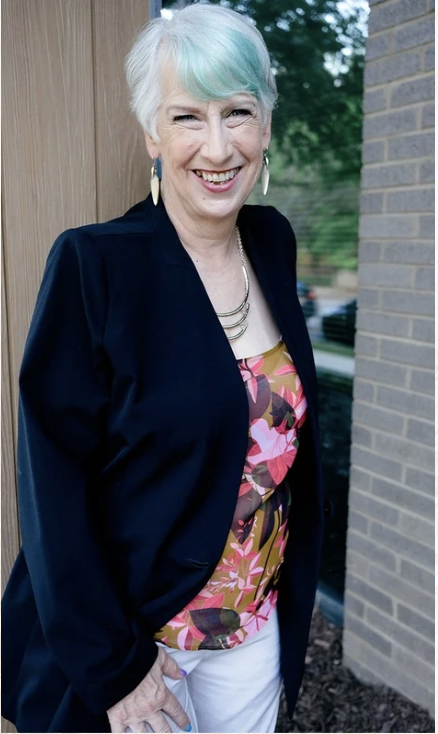
About Jeanne
Jeanne Andrus, The Menopause Guru, has been transforming lives for over a decade through her coaching, writing, and speaking about menopause. As the author of the internationally Best-Selling “I Just Want to Be Me Again!” and the host of the podcast “Menopause Matters,” Jeanne’s expertise in menopause is unparalleled.
Her approach to resolving menopause symptoms goes beyond the conventional, embracing the wildly esoteric. Through her unique blend of coaching, known as Menopause Mastery Coaching, bolstered by hypnotherapy, NeuroLinguistic Programming, Reiki, yogic breathwork, and a deep appreciation for science and anthropology, Jeanne empowers women to navigate this transformative stage with grace and understanding.
But Jeanne isn’t just an expert in menopause; she’s also a living testament to her teachings. Her own journey through perimenopause was marked by uncertainty and emotional upheaval until she began focusing on her health and happiness, unraveling the mysteries of her own body.
Driven by a desire to demystify menopause and offer women the support she wished she had, Jeanne delved into the science behind menopause. Through her research, she uncovered not only how holistic practices can alleviate symptoms but also the profound shift in perspective that menopause brings—a shift she refers to as the “magic” or the “gift” of menopause.
According to Jeanne, menopause isn’t just about symptom relief; it’s about embracing our true selves and living with purpose and passion. Recognizing the importance of understanding and support on her own journey, she made it her mission to provide women with the tools they need to thrive.